Science & Technology
Reading, Word Net & Writing
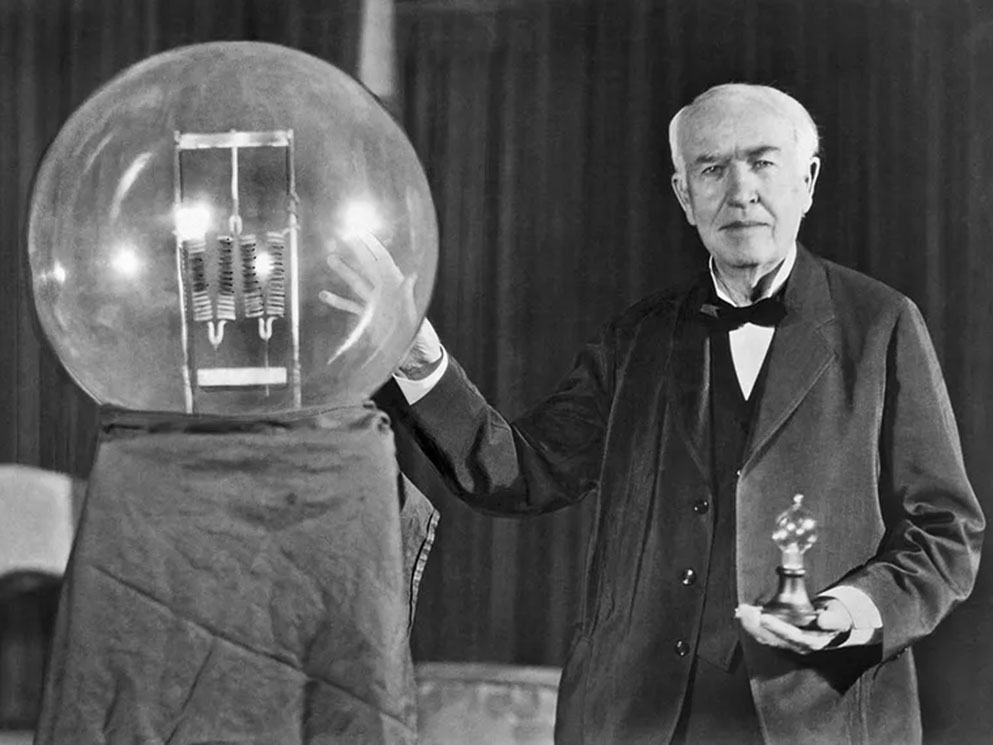
Thomas Edison, the American inventor, was born in Milan, Ohio, on February 11, 1847. He was the seventh and youngest child of Samuel and Nancy Elliott Edison. Edison received very limited school education. He attended school for only three months but his mother, a former teacher, guided his learning.
When he was 12 years old, he began selling newspapers, candy, and sandwiches on trains between Port Huron and Detroit. Later, he hired others to work for him selling goods on the trains to spend his spare time experimenting with electrical and mechanical apparatus.
While he was working as a telegraph operator in Port Huron, he made his first important invention, a new telegraphic instrument. Later, while he was working in Boston, he invented a vote recorder.
Edison earned $40,000, and with this money he established his own laboratory in 1876. In 1877, Edison announced his invention of a phonograph. Two years later he exhibited publicly the electric light bulb, his most important invention.
Edison was suffering from several illnesses when he died in bed, at his home on Oct. 18, 1931.
Read the text again to answer these questions:
Word Net
Write the nouns for the following verbs. Follow the example.
Writing: Potato Chips
Reorder the sentences (1-9) to write a paragraph about how potato chips were invented. There is one sentence which you must NOT include (leave it blank).

- a. He said that they were not thin enough and cooked enough.
- b. A chef cook invented them.
- c. The chef got very angry and sliced the potatoes paper-thin, and cooked them for a long time.
- d. The customer did not like the potatoes and sent them back.
- e. He wanted to teach the customer a lesson, but he got a very big surprise : the customer liked the potatoes and asked for more.
- f. This is how potato chips were born !
- g. The invention of potato chips was accidental.
- h. Many people like potatoes.
- i. One day, the chef was working when one of the customers ordered potatoes.
- j. The chef prepared another dish of potatoes, but the customer reacted in the same way.